





Glass Corner Finishes Explained: Straight, Dubbed, Radius & Nipped Corners
Glass Corner Finishes Explained: Straight, Dubbed, Radius & Nipped Corners
W hen ordering bespoke glass for your home or business, there are several details to consider beyond the glass type, thickness and dimensions. One important choice is the corner finish. Whether you're ordering a glass table top, floating shelf, desk protector or bespoke mirror, the way the corners are finished can affect the appearance of the finished product and how it fits into your space. At Made to Measure Glass, you can customise your glass to suit your requirements. Understanding the differences between straight, dubbed, radius and nipped corners will help you choose the right finish when placing your order online.
Key Takeaways
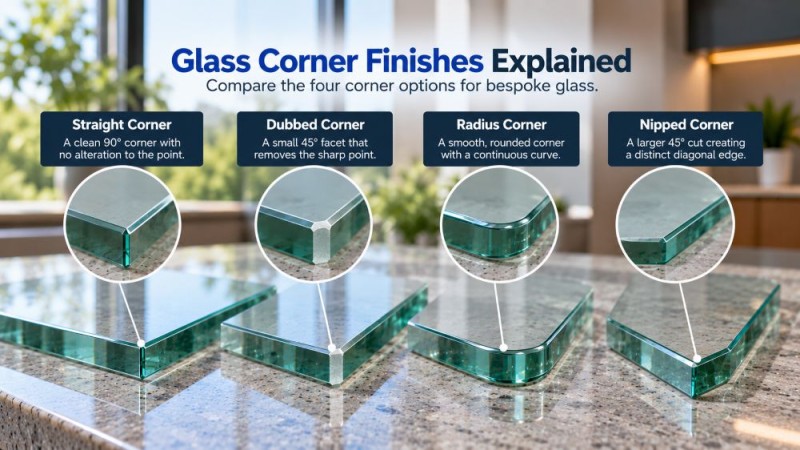
- Straight Corners retain a square, 90-degree appearance and are often used where the corners fit inside a frame or channel.
- Dubbed Corners have a small angled facet ground off the point, reducing its sharpness while keeping the overall square appearance.
- Radius Corners feature a smooth, rounded curve and are popular for exposed glass table tops, desks and shelves.
- NIpped Corners have a more prominent diagonal section removed, creating a distinctive clipped-corner design.
- The best option depends on your design, the way the glass will be used, and whether the corners will be exposed or concealed.
- Corner finishing does not replace the need to select the correct glass type and specification for your application.
Why Do Glass Corner Finishes Matter?
When glass is cut to a particular shape or size, the corners can be finished in different ways to achieve the desired appearance. A square piece of glass might have pointed corners, slightly clipped points or smoothly rounded corners. Each option creates a different look, so it is worth considering the finish before ordering.
Corner finishes are particularly relevant for products such as:
- Glass table tops and desk protectors
- Coffee tables and dining tables
- Bespoke glass shelves
- Glass furniture protectors
- Mirrors cut to size
- Decorative glass panels
For example, a square glass top designed to sit inside a table frame may need a different corner profile from a glass desk top with exposed corners. Choosing the right finish helps you achieve the appearance you want and ensures the glass is suited to its intended application. However, the corner finish alone does not determine whether the complete glass product is safe for a particular use.
How to Choose the Right Glass Corner Finish
The right corner finish depends on the appearance you want, the shape of the surrounding furniture and how the glass will be used. Here are four considerations to help you make your choice.
1. Consider Where the Glass Will Be Used
Think about whether the corners will be visible, enclosed within a frame or exposed to everyday contact. For example, glass sitting inside a table frame may require a different profile from a glass desk top that extends to the edges of the desk. If the corners are exposed, consider the potential for people to come into contact with them. A radius finish removes the pointed outline, while dubbing reduces the point more subtly. The appropriate finish will also depend on the glass type, thickness and intended application.
2. Match the Existing Furniture
If you are ordering replacement glass for a table or desk, the corner finish should complement the furniture underneath it.
- Square furniture: Straight or dubbed corners may suit a crisp, angular design.
- Furniture with subtly clipped corners: Dubbed corners may be appropriate where only a small facet is required.
- Furniture with rounded corners: Radius corners can help the glass follow the outline of the furniture.
- Furniture with pronounced diagonal corners: Nipped corners may provide the closest match.
When replacing an existing glass top, measure the full dimensions and compare the corner profile with the original piece before ordering.
3. Think About the Finished Appearance
Corner finishes can make a subtle but noticeable difference to the overall look of a glass product. Straight corners create a crisp, angular appearance. Dubbed corners preserve that appearance while introducing a small diagonal facet. Radius corners give the glass a softer outline, while nipped corners create a more distinctive geometric design. Consider the style of the furniture and whether you want the glass to blend into the existing design or introduce a more noticeable detail.
4. Check the Measurements Carefully
With made-to-measure glass, accurate dimensions are essential. Before placing your order, check the measurement instructions and ensure that your chosen corner finish matches the intended shape. For radius and nipped corners in particular, the size of the corner alteration affects the final outline of the glass. A panel may have the correct overall width and height but still fail to match the furniture if the corner dimensions are incorrect. If you are unsure how to specify an unusual corner, contact the team before ordering.
Order Made-to-Measure Glass Online
Whether you need a square glass table top, a replacement furniture protector, bespoke shelving or a custom-shaped glass panel, understanding the differences between straight, dubbed, radius and nipped corners will help you make a more informed choice. At Made to Measure Glass, our online ordering process allows you to customise your glass to suit your requirements, including the available shape, dimensions and processing options.
Ready to order your glass cut to size? Explore our range of bespoke glass products and choose the options that best suit your project. If you need help specifying a corner finish or measuring a replacement piece, please contact our team before placing your order.